
Origins
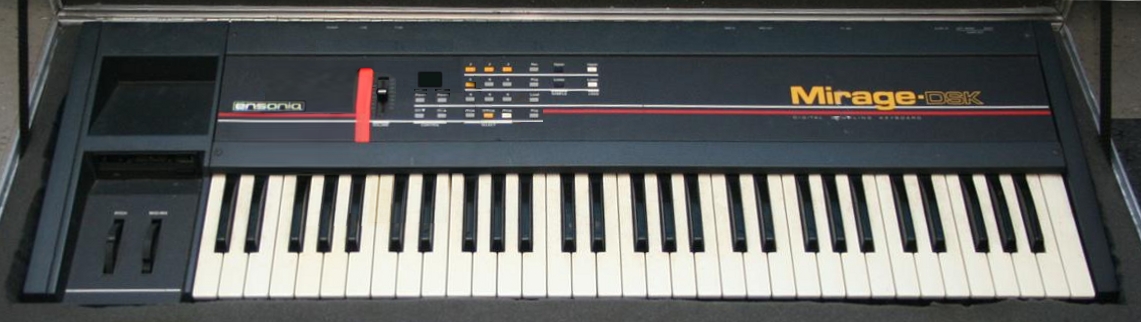
Ensoniq introduced the Mirage in 1984 as the first affordable digital sampler, retailing at $1,695—roughly one-fifth the price of competing products from Fairlight and Emulator. This aggressive pricing strategy brought sampling technology to a much broader market, fundamentally changing music production accessibility.
Design & Technology
The Mirage offers eight-bit sampling at 32 kHz with 128KB of RAM divided between two independent sampler sections. Each section provides approximately 2 seconds of sampling time, enabling stereo sampling or splitting sounds across the keyboard. The 61-key velocity-sensitive keyboard supports aftertouch on later revisions.
A Curtis CEM3328 voltage-controlled filter provides analog warmth to the digital samples—an unusual feature that distinguished the Mirage from fully digital competitors. The sequencer stores up to 333 events. The built-in three-digit LED display and hexadecimal interface require patience but enable comprehensive editing.
Production History
Ensoniq sold approximately 30,000 Mirages between 1984 and 1988, making it by far the best-selling sampler of its era. The DSK-8 keyboard and DMS-8 rackmount variants offered form factor options. Later revisions (Mirage DSK-8 with gray buttons) improved reliability and added features.
Notable Users
The Mirage's affordability brought sampling to countless musicians who could never have afforded earlier instruments. It appeared on numerous 1980s recordings across pop, rock, and electronic genres. Its distinctive crunchy eight-bit character became a sought-after sound even after higher-resolution samplers became available.
Cultural Impact
The Mirage democratized sampling technology, enabling bedroom producers and small studios to incorporate digital audio into their productions. Its success forced competitors to develop more affordable samplers, accelerating the technology's adoption across the music industry. The instrument's lo-fi character, initially a limitation, became a desired aesthetic that continues to influence contemporary production.
Market & Collectibility
Mirage samplers remain affordable on the used market, typically $200-$500 depending on condition and included disks. The abundance of surviving units keeps prices low. The unique eight-bit through analog filter sound attracts enthusiasts seeking vintage character. SCSI-equipped later models and original factory disks add value. The Mirage represents an accessible entry point into vintage hardware sampling.